
The history of land management co-evolved with the ecology of fire. Tens of thousands of years ago, Native Americans burned tracts of land. Amongst the reasons were clearance for sight lines, setting up villages, protection from enemies, and the cultivation of land through agriculture. These fires, especially in the southeastern United States, regenerated the land and reset them from stages of succession. Plants, trees, eco-systems, habitats, and plant communities developed adaptations to survive, regenerate, and thrive after burning.
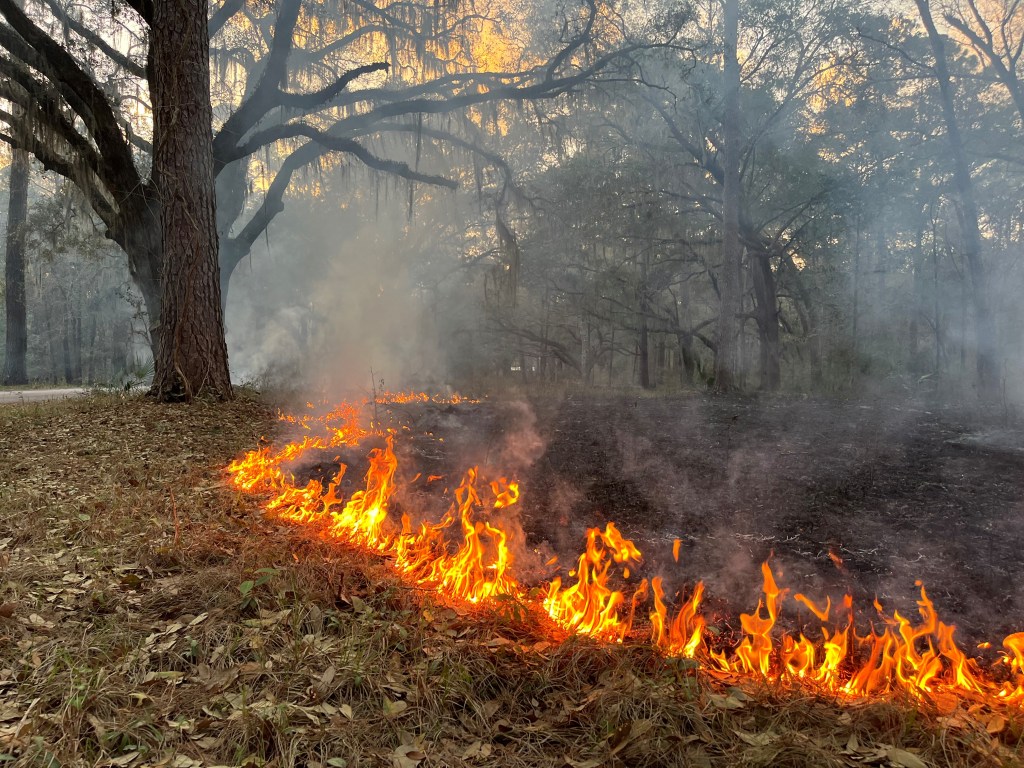
Prior to human involvement, lightning strikes made fire obligatory in the landscape at regular intervals and shaped the land into grasslands and savannahs. European settlers followed and they rapidly learned the benefits of fire to aid their dependance on hunting and herding in the open landscapes.

Whatever the history and reasons, prescribed fire became an essential management tool in fire adapted ecosystems to restore equilibrium, increase health and control vegetation. Fire keeps the land more open thereby allowing sunlight to reach the herbaceous ground cover layer. Otherwise, without management, the thick understory shrub layer would outcompete the herbaceous layer through succession.
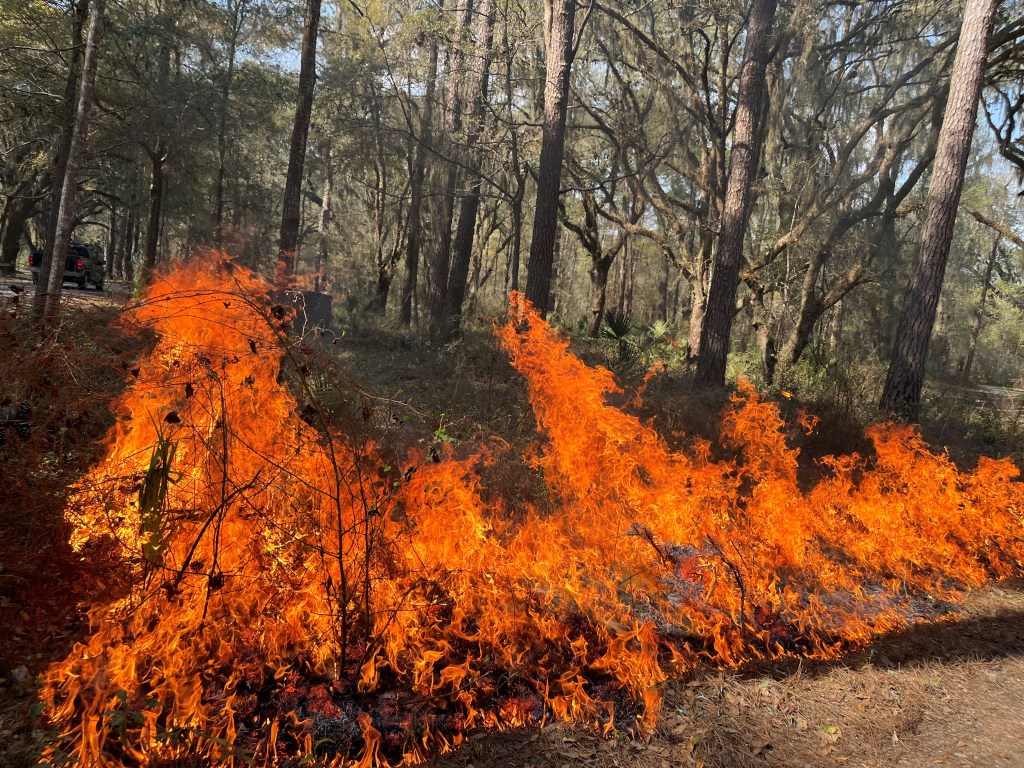
Fire is also economical and efficient. The other alternatives of mechanical removal and chemical herbicide control of undesired and aggressive vines and shrubs have cost and ecological downsides. Depending on the area of the country you are in, plants such as Chinaberry, Chinese Tallow Tree, Japanese Honeysuckle, Chinese Privet, and miscellaneous aggressive vines can be controlled efficiently through fire.

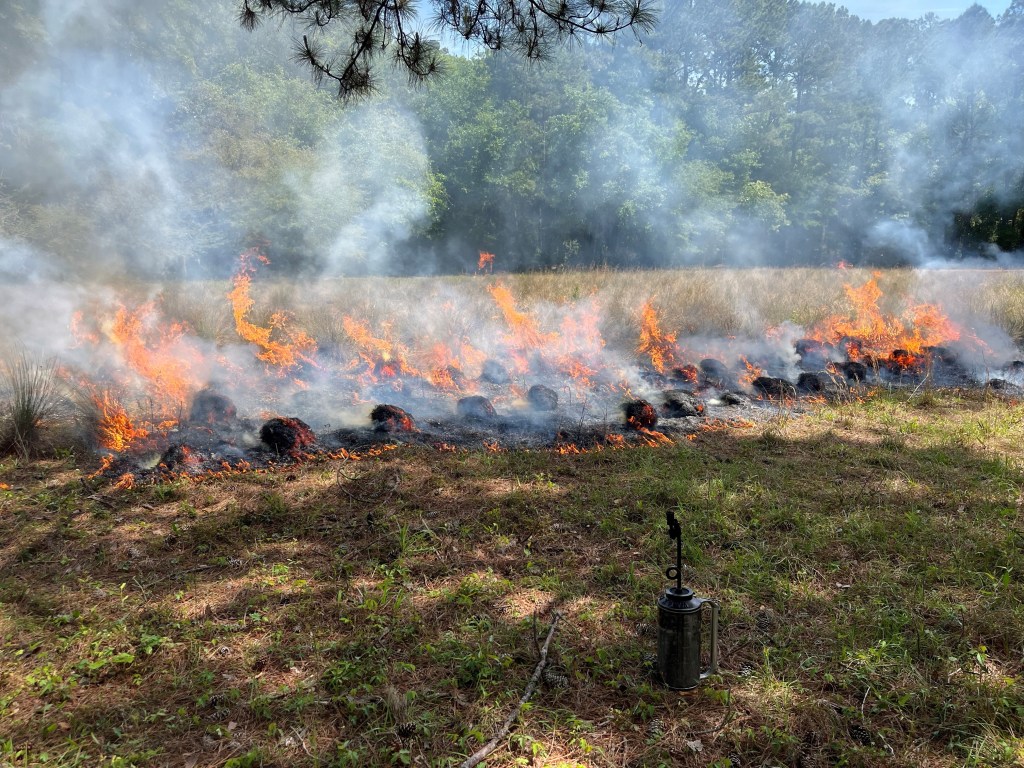
Prescribed fire is an art and a science. It depends on many simultaneous factors for a successful burn. As with everything, nothing beats the repetition of experience. For a successful and responsible burn, many simulaneous factors are essential: synching up a favorable weather forecast, specific weather conditions, acceptable humidity levels, changing wind patterns, and rainfall. Strategies such as fire breaks and discing the land aid in controlling and limiting the spread of fire. Backfires are often used to burn against the flow of the wind patterns to slow the spread and temperatures of the fire. Headfires are lighting with the wind which is used sparingly because it can move the fire rapidly and more out of control. Spotfires and flanking fires are other additional techniques in the arsenal of the fire manager.

Knowledge of what you are burning and how much you are burning is required prior to lighting a drip torch. The plant debris or fuel determines what the fire will do and where it will go. Mathematical estimations of fuel loads as well as science such as ventilation rates, dispersion, inversion, and air stagnation play essential roles in how the fire interacts with the landscape. Burn maps and plans are often drafted well in advance of burning. Periodic fire keeps fuel loads lower and limits the spread of larger, more uncontrolled fire. Smoke is as much of a threat as fire to nearby roads, highways and communities.

In conclusion, prescribed fire is an essential management tool for the landscape. Specific plants communities, like Maritime Forests and Longleaf Pine savannahs depend on it for survival. In an age of increased fragmentation and development, fire needs to be understood and practiced with responsibility and purpose. The present day and future of prescribed burns will continue to evolve as climate changes patterns, human development increases and fragmentation scars the landscape.

 Green Is The Color
Leave a comment