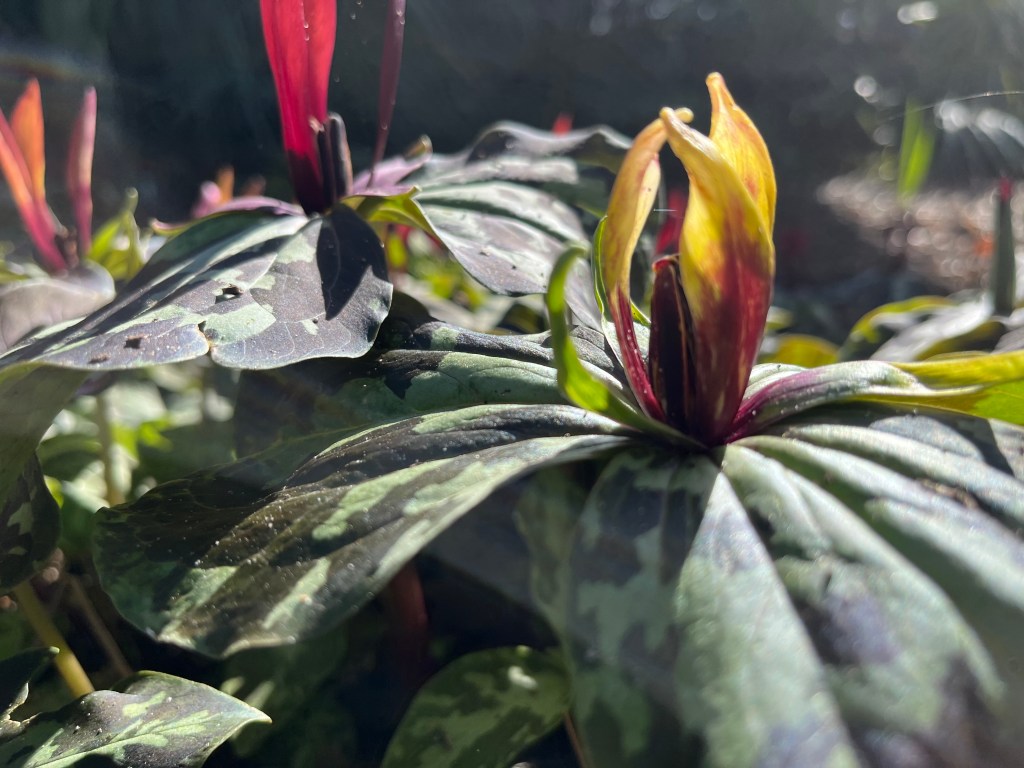
Trillium! Marvel of the woodlands. Jeffersonia, Trout Lily, Thalictrum, the mighty Bloodroot. These are the spring ephemerals. These are my plants during days when nothing else really happens. Their emergence signals that the cyclical circle of seasons has not been disrupted. Everything is in order and all has been restored.
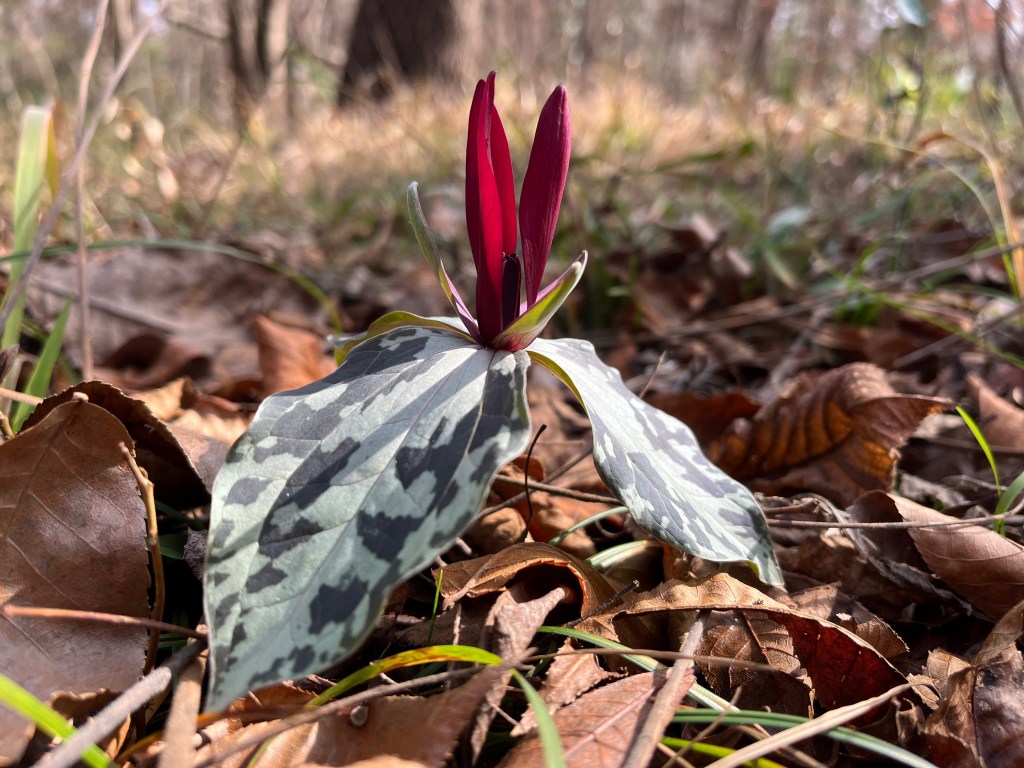
Trillium. Three leaves, three sepals, three petals. Trillium are woodland plants that awaken under the sun of deciduous trees as spring ephemerals.
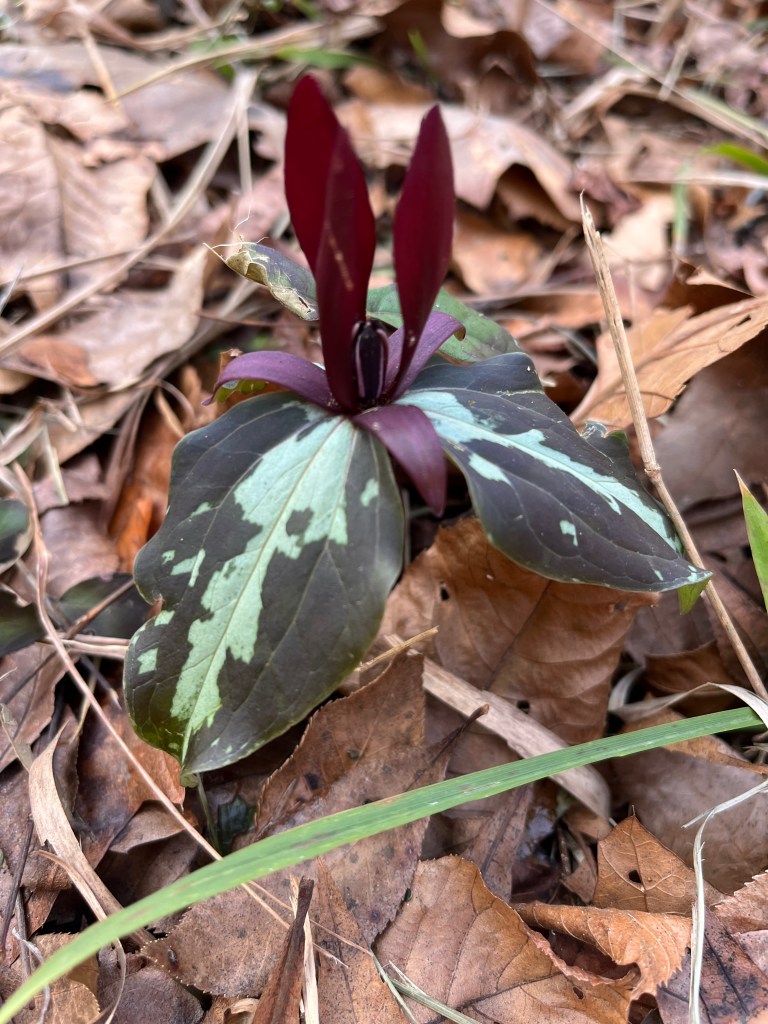
There is a distinction between the majority of northeast and southeast trillium. The majority of northeast Trillium are pedunculate which means the flowers hang on a stem. The leaves of these Trillium are predominantly green. In the southeast, the Trillium are called sessile with the flower sitting directly on the leaves. Sessile Trillium showcase distinctly kaleidoscope camouflage leaves.
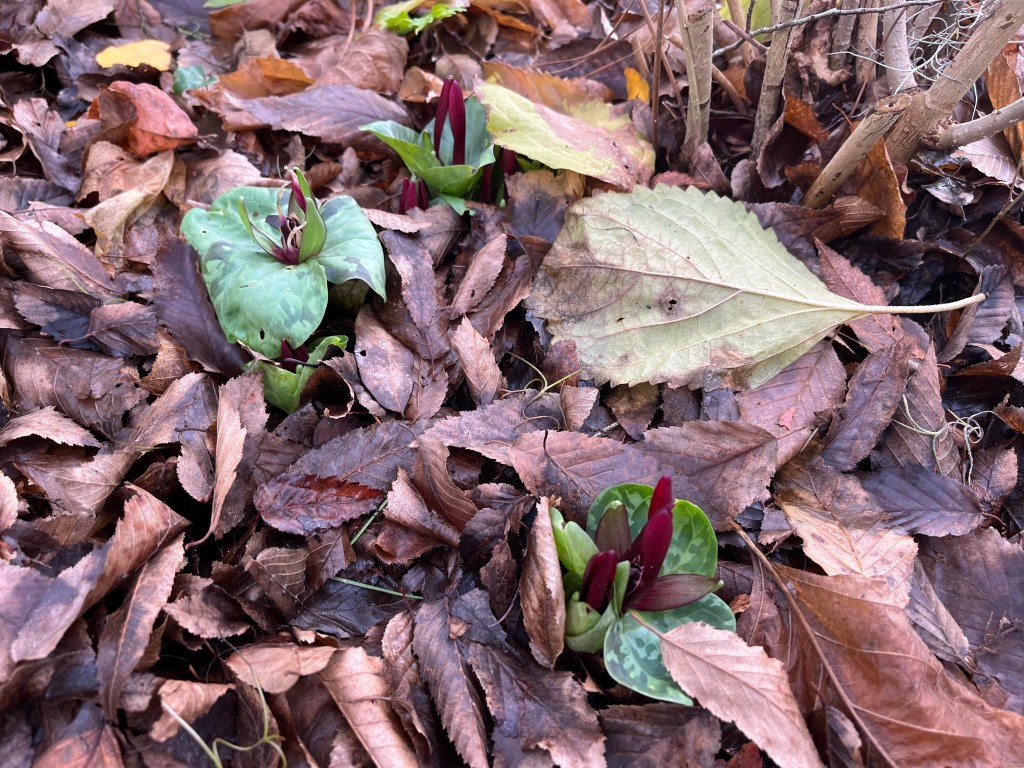
There is much Trillium diversity in the south with over 30 different species. However, many are in the mountains. In the coastal plain, there is 1 species called Trillium maculatum or a slew of common names including spotted toadshade, mottled toad shade, spotted wake robin, spotted trillium, depending on your vernacular. The flower resembles a flickering flashing flame while flaunting flashy inkblot leaf patterns. These sessile Trillium multiply in clumps and also by seed.
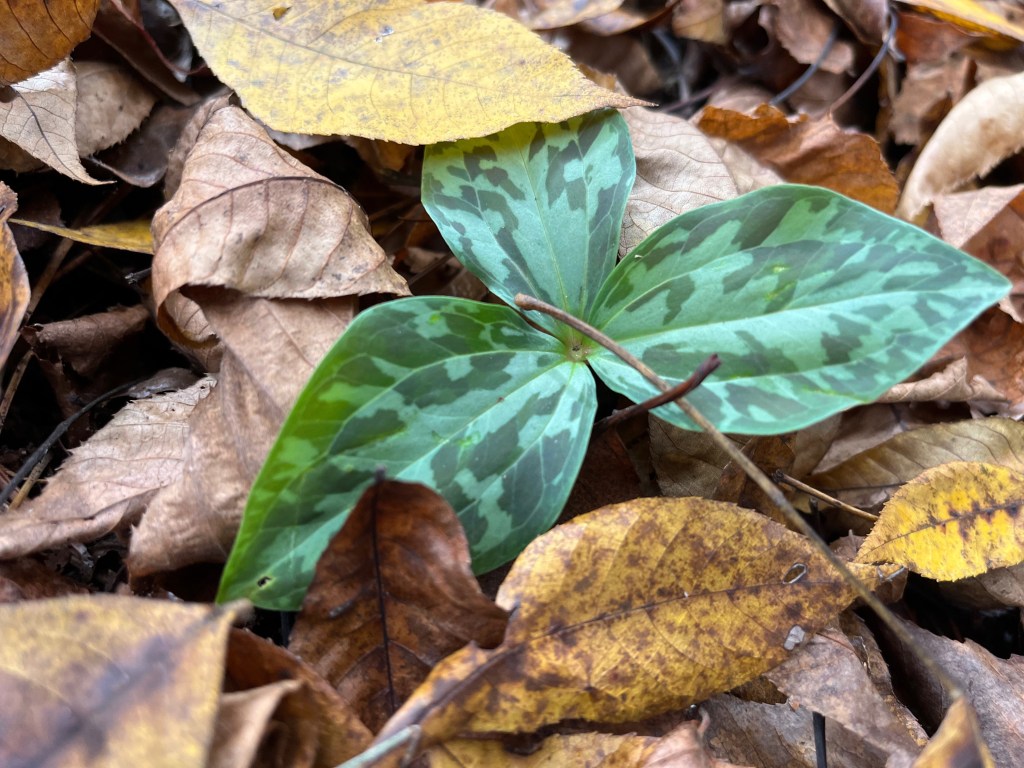
Trillium maculatum grows in calcareous (high pH and nutrient rich) bluffs in mesic woodlands between Charleston and the middle of Florida. The soil in these coastal mesic woodland areas is unique. Years and years of Native American oyster shells collecting, gathering, and dumping in these areas loaded the soil with calcium carbonate which raises the pH and makes more nutrients available to the plants. Other unique to the southeast plants that grow in these plant communities include Red Buckeye, Indian Pink, Tulip Poplars, Bloodroot, and Black Walnut.

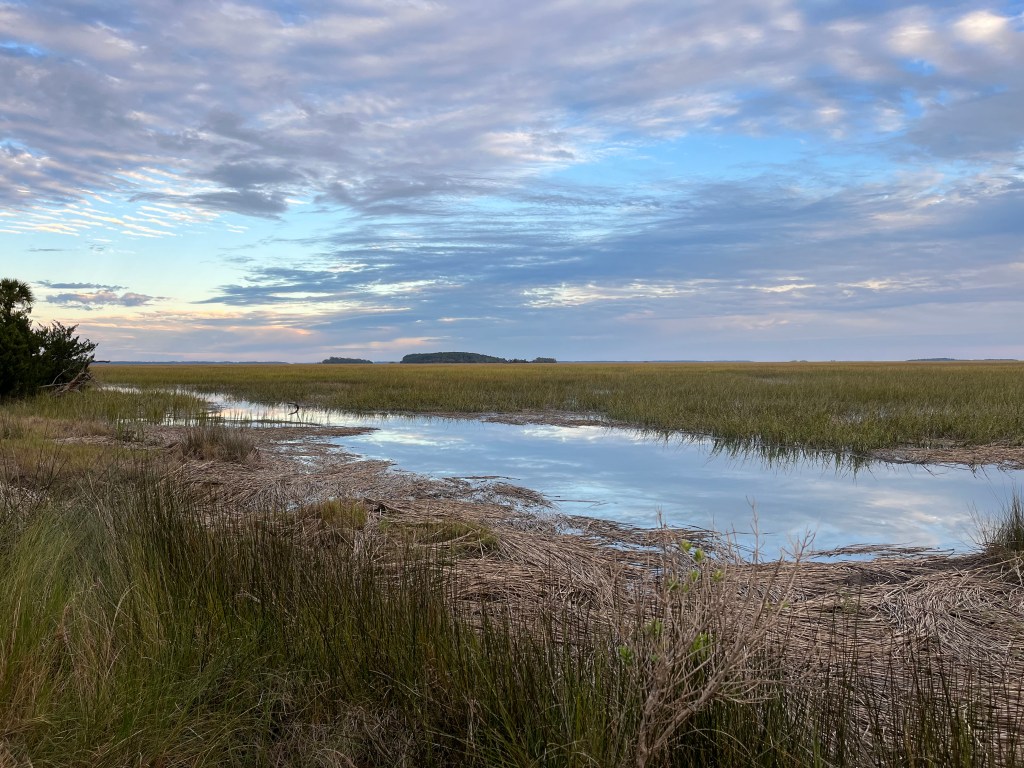
These Trillium grow naturally on a sea island in Beaufort County, South Carolina. They grow approximately 1000 feet away from this salt water tidal river scene.
Other miscellaneous information about Trillium is that they are monocots and used to be classified in the lily family. They are pollinated by fungus gnats. The fragrances of flower between species vary between rotting meat and lemon-y dish soap. Trillium maculatum has the privilege of the latter. They produce sugary seed fruit clumps called elaiosomes which wasps, ants, and bees haul away to eat while depositing seed in the soil. Last but not least, as a retired Michigan school teacher, Fred Case and his wife Roberta were the king and queen of Trillium and wrote a wonderfully recommended book titled Trillium.

 Green Is The Color
Leave a comment