Driving east from Phoenix, it began to rain and started to smell of Creosote.
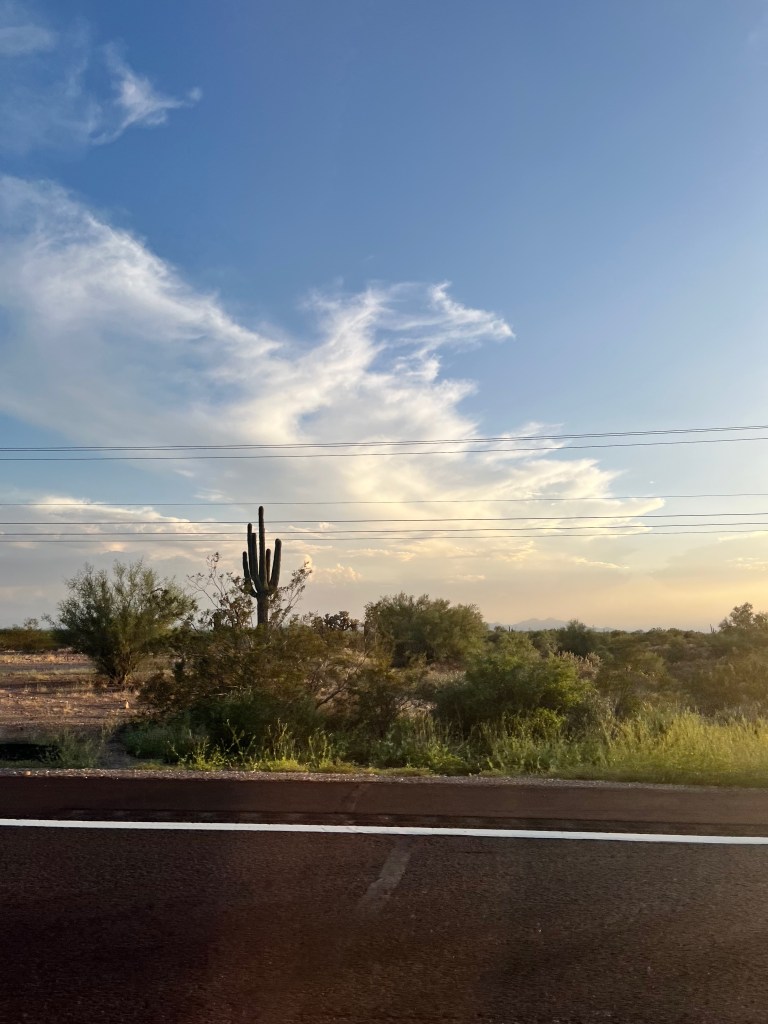
Fully aware that many things do not live up to preconceived ideas and expectations, sometimes things do. For years, I have wanted to see Saguaro cactus (Carnegiea gigantea) but never had the opportunity to experience the plant in its habitat of sky, creatures, sounds, birds, and colors. Over the years and after different travel stops in East Texas, West Texas, and assorted botanical gardens, I had examined several transplanted versions of Saguaros in cultivation but not in the wild. These examples showcase attributes of the plant but lack the full picture cohesion of experiencing the plant in its native habitat. Like seeing an animal in a cage at the zoo. I embarked on a work-related trip into the Superstition Mountains of Arizona, within the heart (or at least artery) of the Saguaro cactus range.
There are four distinct deserts in the United States; the Great Basin, the Mojave, Sonoran and Chihuahuan. A desert is generally defined as an ecosystem with limited annual rainfall. Arizona uniquely has examples all four deserts. The Saguaro cactus only grows in the Sonoran desert.

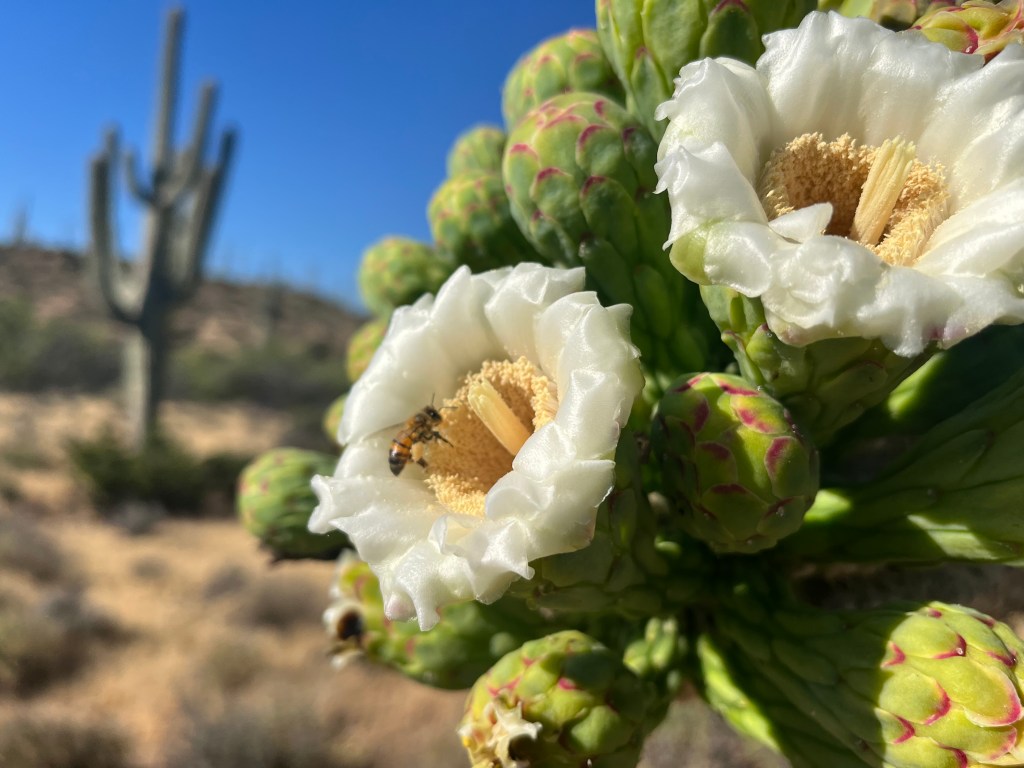
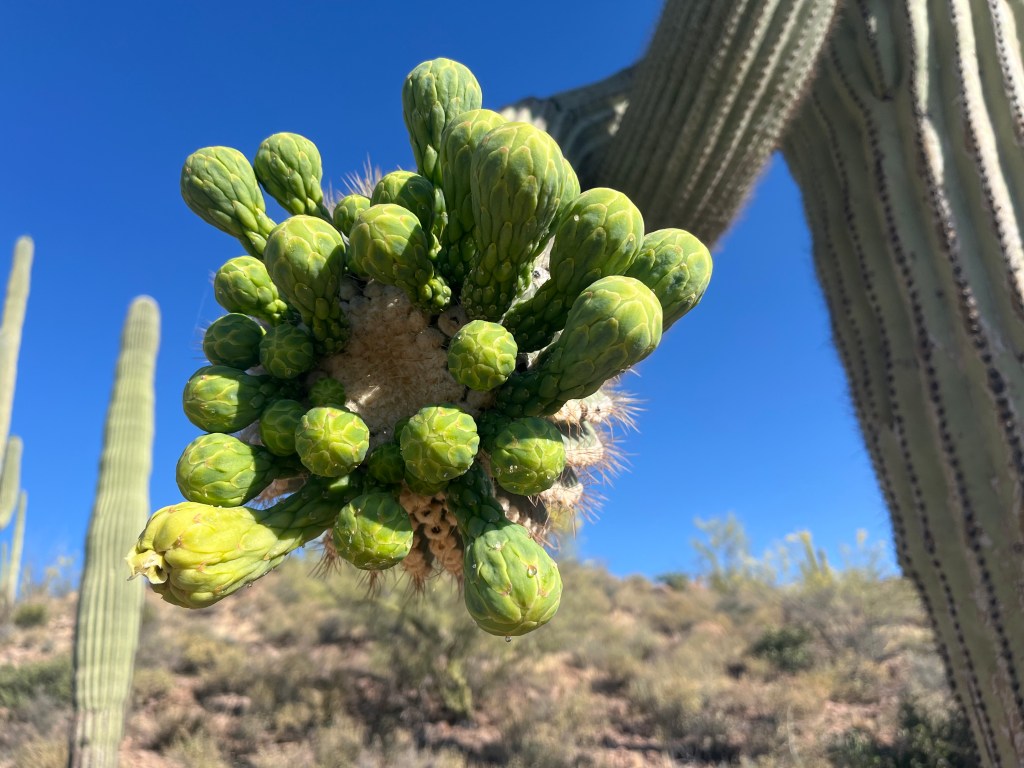
Along Route 60 heading east from Phoenix to the mining town of Globe, skyscrapers of Saguaros dot the landscape like buildings of a city. From long gone Native American history and into the present day, the quiet stillness of the Saguaro radiates through the desert landscape. Like many things of significance, this cactus grows slow. Their lifespans contain multitudes, multiplying that of a human. The cactus reaches maturity around 125 years of age, flower after 35 years, and branches their arms between 50 and 100 years old. Some plants live over 200 years. According to the National Park Service, studies indicate that a saguaro grows between 1 and 1.5 inches in the first eight years of its life, often growing under the caretaker guidance of nurse trees where seedlings can glean nutrients and water while staying shaded.
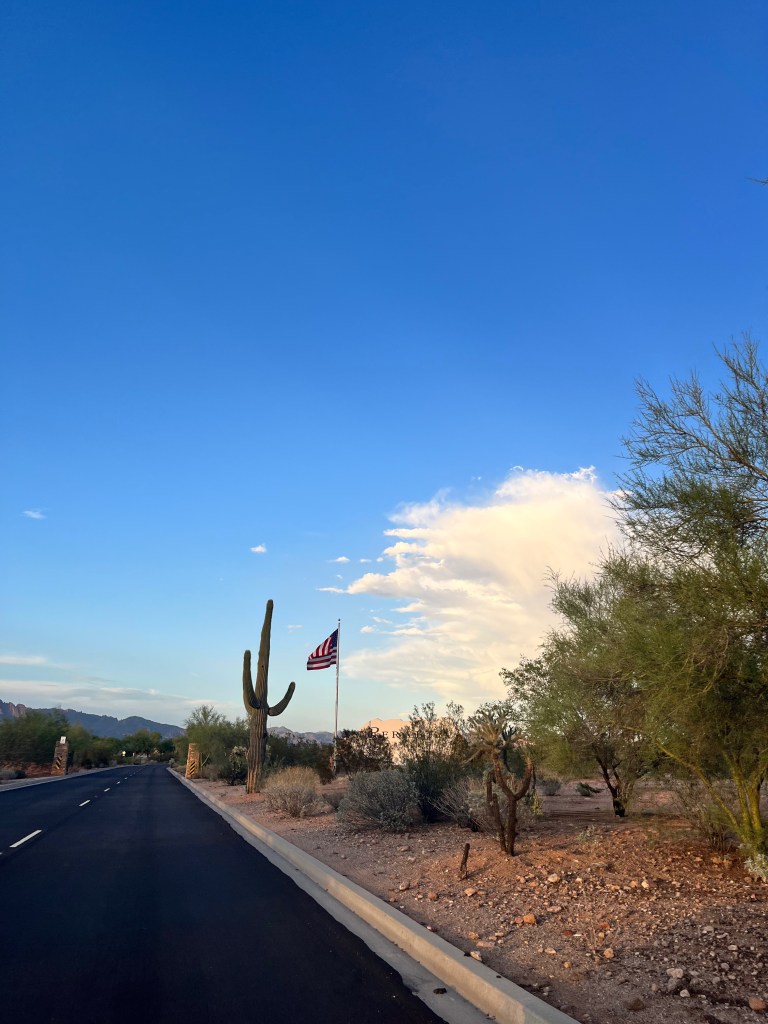
With their columnar frames resembling statues across the landscape, Saguaros can grow 50 feet tall.

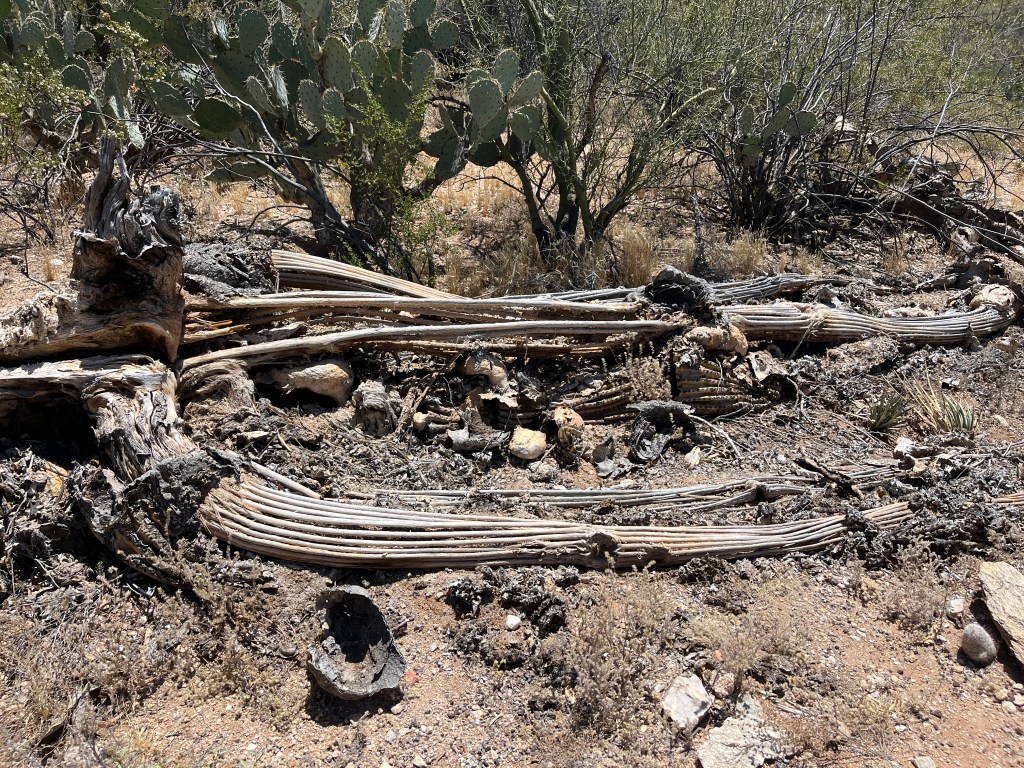
The tree-like Saguaro cactus are marvels of adaptation. Their form mirrors their function which is primarily water storage. Saguaros can weigh 6 tons or more. This tremendous weight is supported by a circular skeleton of interconnected, woody ribs. The number of ribs inside the plant correspond to the number of pleats on the outside of the plant. The roots grow from the plant radially, several inches beneath the ground. During a heavy rain, a saguaro will absorb as much water as its root system allows. To accommodate this potentially large influx of water, the pleats expand like an accordion. Conversely, when the desert is dry, the saguaro uses its stored water and the pleats contract.

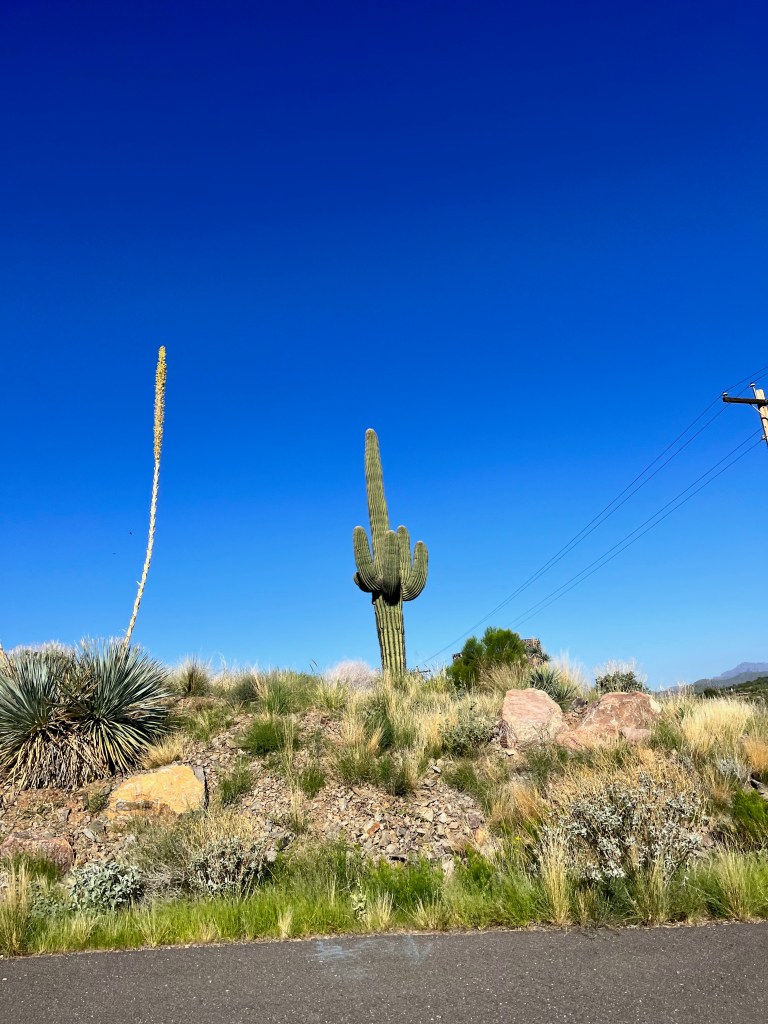
Sagauros can be found growing within a complex plant community of Palo verde, Ironwood, Agaves, Yucca, Mesquite, & dazzling Dasylirions. Counter to the traditional idea of barren deserts, these habitats are brimming with life. Low, flat scrub desert can be sizzling hot and unsuitable for plants and creatures. But, high desert is different. The higher the elevation, the more variation in temperature and the more diverse the habitat. The higher the elevation, the colder the lowest temperature can get. Microclimates are then formed through directional exposure.

Saguaro cacti are host to a great variety of animals. In late summer, purplish red fruit called bahidaj ripens and provides food nourishment for animals during a time of scarcity. Other animals like jack rabbits, bighorn sheep, and mule deer eat saguaro flesh during times of desperation for hydration. An array of creatures such as the gilded flicker, elf owls, screech owls, purple martins, finches hawks, ravens, great horned owls, and the Gila woodpecker all utilize the cacti for nesting, protection, and platforms for hunting.
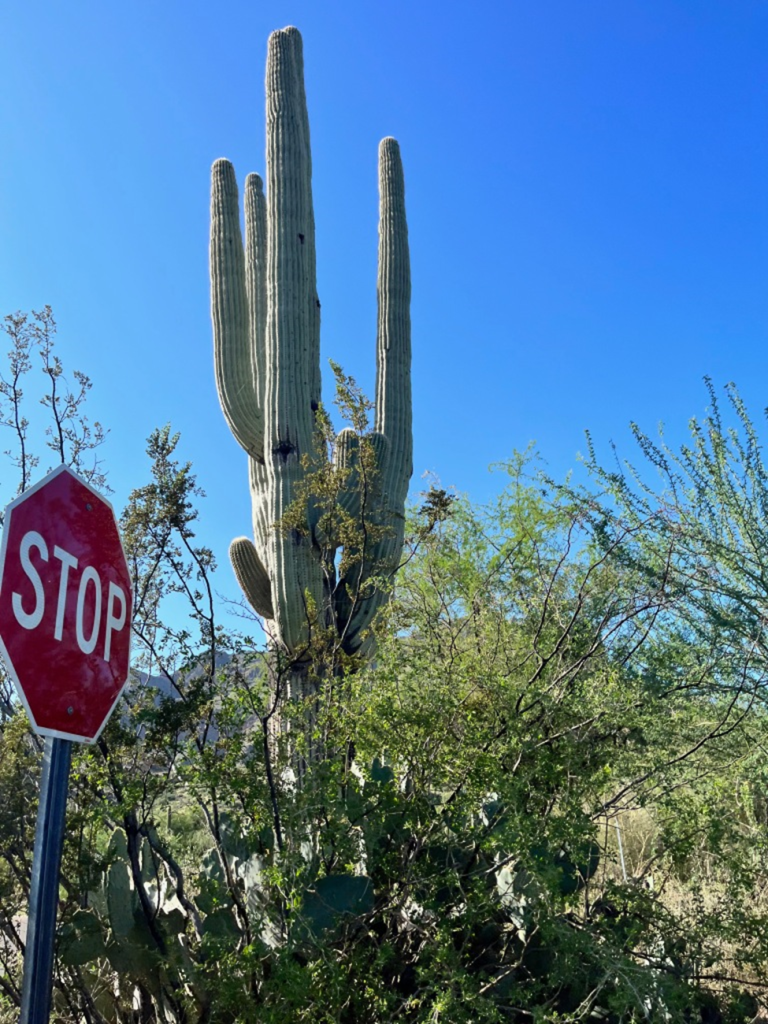
Through time, indigenous people resourcefully used the Saguaro cactus, as well. The fruit was gathered to make ceremonial jelly, candy, and wine. The strong, woody ribs were gathered to construct the framework for the walls of homes.
Like everything, there are limitations and threats to the prosperity of the Saguaro. Freezing temperatures also play a role in corralling the cactus. Elevation, and directional exposure limits the range of the plant as they are generally found growing from sea level to approximately 4,000 feet in elevation. Saguaros growing higher than 4,000 feet are usually found on south facing slopes where freezing temperatures are less likely to occur or are shorter in duration.
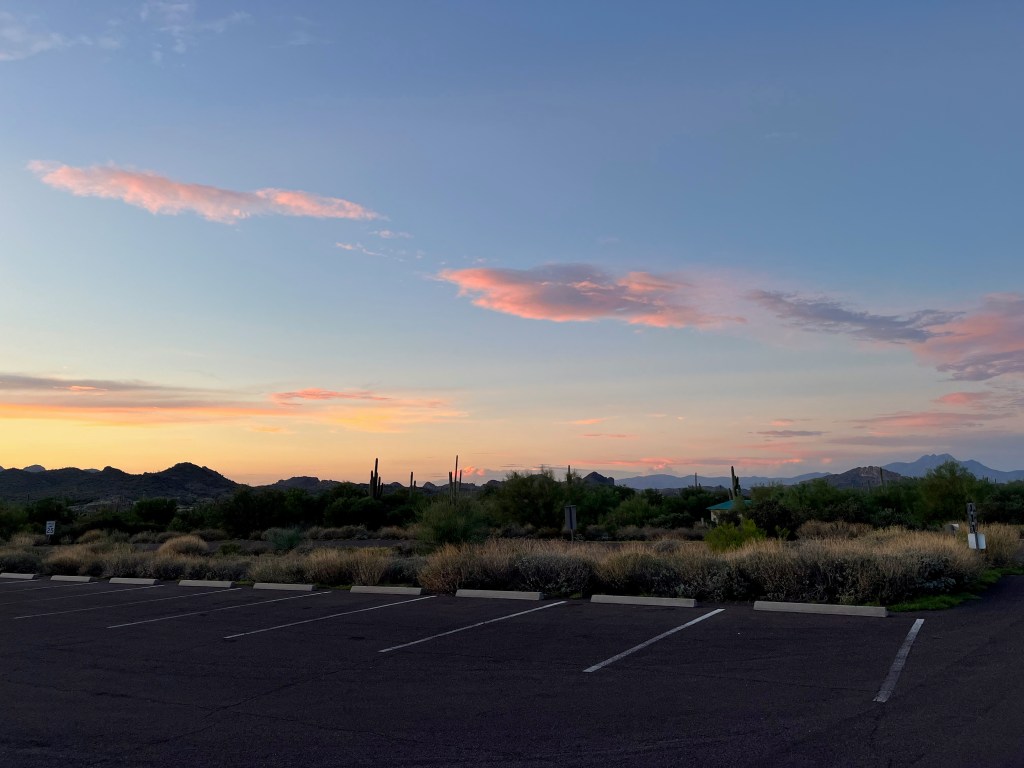
The biggest threat to the Saguaro is expanding human population and development of new homes. Exotic grasses like Buffelgrass were introduced in the 1970s as problemsolvers for erosion control and cattle feed. Soon after, Buffelgrass began turning the desert into a grassland, invading undisturbed areas of the desert and roadside. Then, due to the fire adaptability of the grass, fire spread much more easily. Saguaros are not fire adapted and the large scale escalation of brushfires are more of a constant in the southwest because of grasses like Buffelgrass.
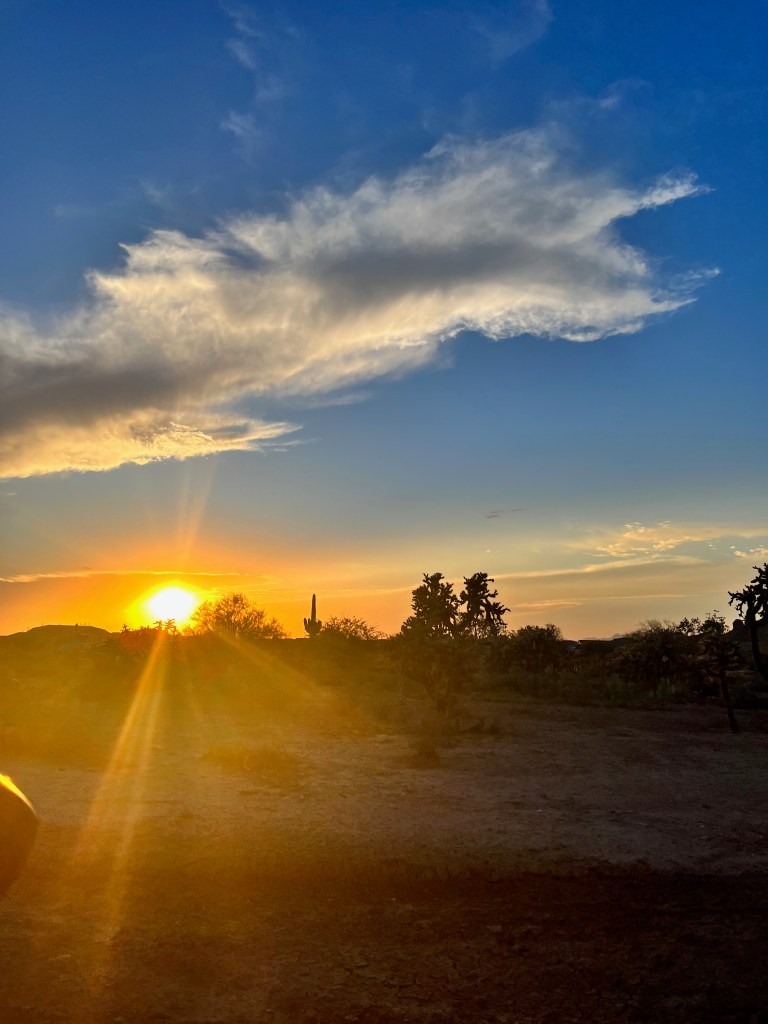
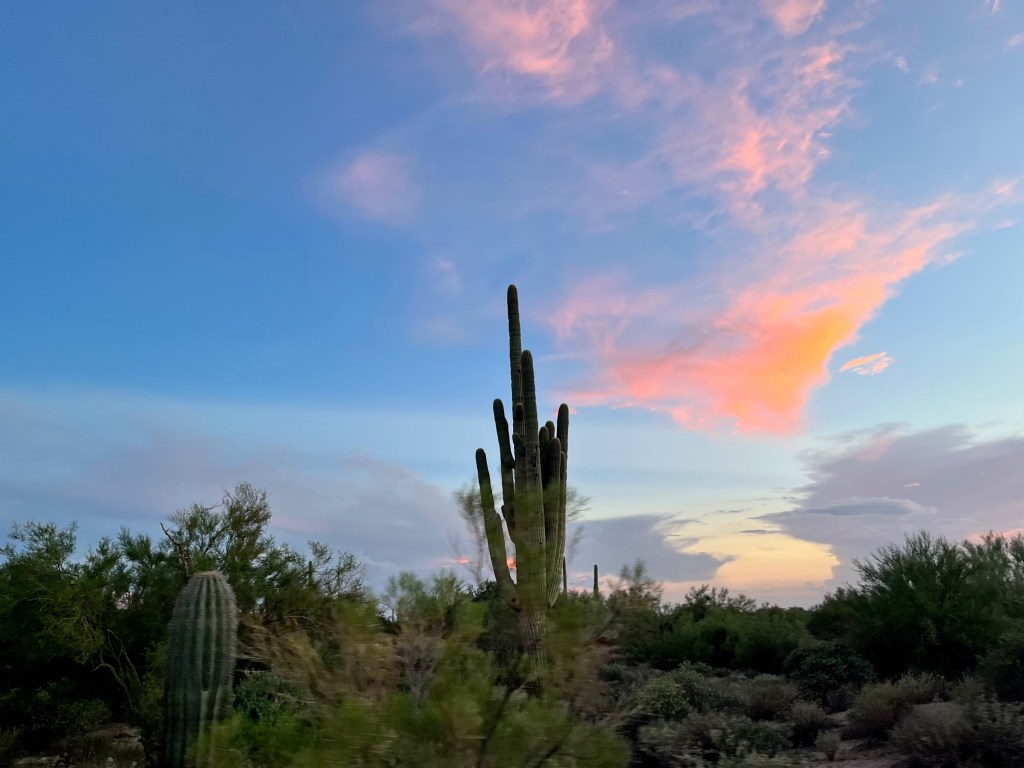
Driving at sundown on empty highways with the windows down racing through the desert in a rental car, there is an unmistakable specific freedom. It is openness. It is vastness. It is a freedom. Or, it may just be the colors in the sky or the feeling of warm air against your skin. Either way, Saguaro and their habitats are a part of that feeling.
Whether a respite from the recent age of tumult in the news or an appreciation of the past, present, and future of wild wilderness, Saguaros represent a continuum. The world may change, people get older, loved ones pass on, news cycles recycle, technology advances, possessions become useless, humanity prospers, humanity digresses yet certain things remain constant. The Saguaro will always be there.





 Green Is The Color
Leave a comment